
Your essential DJ video content checklist for 2026
Elevate your YouTube game with our comprehensive DJ video content checklist. Discover essential tips to create videos that shine in 2026!
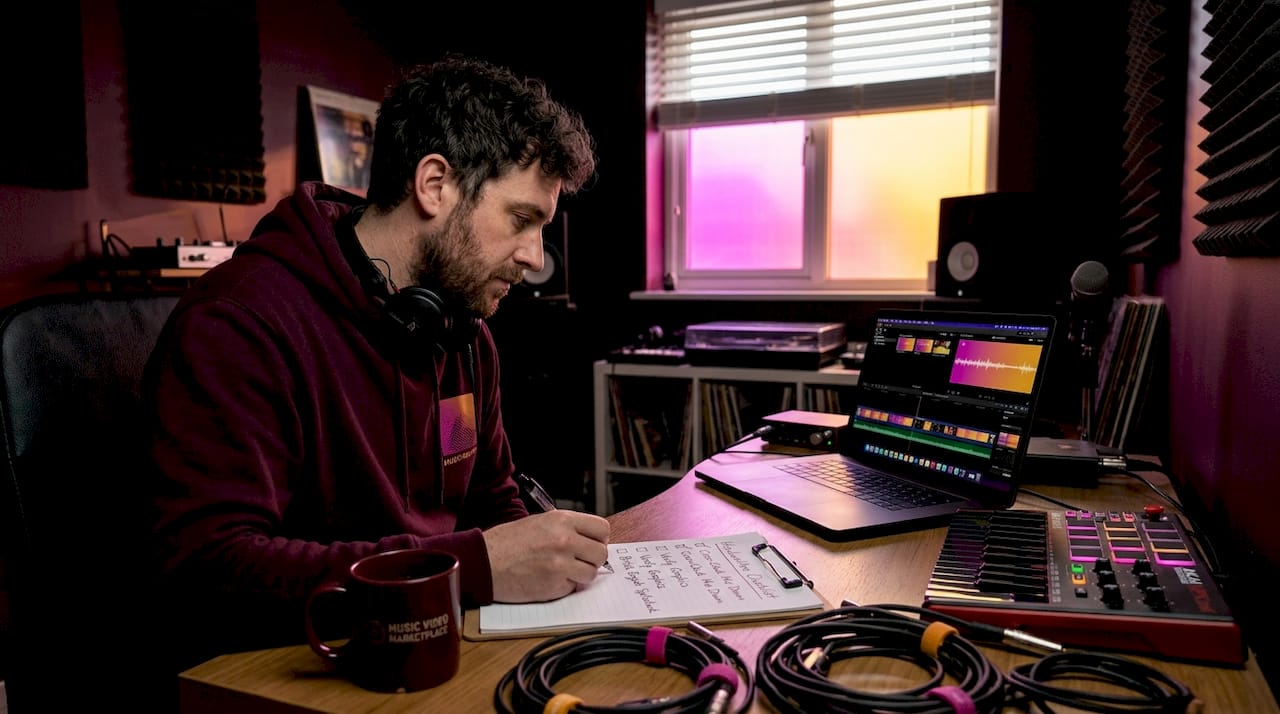
Your essential DJ video content checklist for 2026
TL;DR:
- YouTube competition for DJs and producers demands strategic, polished content aligned with key engagement metrics.
- Consistent upload frequency, compelling thumbnails, and audience retention are essential, with quarterly audits guiding improvement.
- Effective formats include long-form mixes for loyalty, shorts for reach, and niche type beats to target search traffic.
YouTube is more competitive than ever for DJs and producers. With thousands of new mixes, beats, and promo videos uploaded every single day, standing out requires more than a decent recording and a basic thumbnail. The shift towards polished, strategically planned video content is real, and those who treat their channel like a business are the ones pulling ahead. This checklist covers everything you need: the benchmarks that matter, a step-by-step creation process, a format comparison, and honest advice on auditing your results so every video you publish works harder for your music.
Table of Contents
- Key criteria for DJ video content
- Essential elements of a DJ video content checklist
- Types of DJ video content: comparison table
- When and how to audit your video content
- Why most DJ video checklists miss the mark
- Create your next standout DJ video with Music Video Marketplace
- Frequently asked questions
Key Takeaways
| Point | Details |
|---|---|
| Understand key metrics | Focus on CTR, retention, and upload frequency to measure and guide your DJ video strategy. |
| Follow a clear checklist | A step-by-step process saves time and ensures no essential element is missed in your content. |
| Choose the right format | Select between long-form, short-form, or type beats based on your promotion goals and audience. |
| Audit regularly | Review your results at least quarterly to identify trends and maintain content effectiveness. |
| Adapt and improve | Use insights from your audits to evolve your video approach and stay ahead in the DJ scene. |
Key criteria for DJ video content
Now that the importance of a systematic approach is clear, let’s identify the specific benchmarks that lead to impactful DJ videos.
Before you film a single second of footage, you need to understand what success actually looks like. Too many independent DJs upload content without a clear measure of whether it’s working. That guesswork kills momentum and wastes hours you could spend producing music.
The three numbers every DJ should obsess over are click-through rate (CTR), audience retention, and publishing frequency. CTR measures how often people click your video after seeing the thumbnail and title. Retention measures how long they actually stay. Frequency measures how consistently you show up. Together, these three signals tell the YouTube algorithm whether your channel deserves more exposure. According to a YouTube channel audit checklist, the target benchmarks are a CTR of 4 to 10%, a retention rate of 40 to 50%, and publishing at least once per week, with a quarterly audit to keep everything on track.
Benchmark callout: Aim for 4-10% CTR, 40-50% retention, and one video per week. Audit quarterly.
Why do these numbers matter so much for music promotion specifically? Because ad platforms and YouTube’s organic system both reward engagement signals. A video with a 6% CTR and 45% retention will receive far more impressions than a video with stunning production but a 2% CTR. The algorithm does not care how much you spent on your edit. It cares whether viewers click and stay.
The strongest video marketing for DJs strategies build on these benchmarks from the very first video. Here is what to monitor consistently:
- CTR by thumbnail and title combination — test different visual styles and headline formats
- Average view duration — find the exact moment viewers drop off and fix what precedes it
- Impressions vs views ratio — a high impression count with low views signals a thumbnail problem
- Subscriber conversion rate — how many viewers become followers after watching
- Comment and like ratios — qualitative signals that reinforce algorithmic trust
Once you know your numbers, you can make decisions based on evidence rather than instinct. Learning to increase video engagement becomes much easier when you have a baseline to improve against.
Essential elements of a DJ video content checklist
With these criteria in mind, apply them to each stage of the DJ video creation process using this checklist.
A well-structured checklist saves you time, protects you from costly oversights, and keeps your content consistent enough to build a recognisable brand. Work through these steps for every single video you produce.
- Define your goal before you film — Are you building an audience, promoting a specific release, or running a paid ad campaign? Your goal determines the format, length, and call to action.
- Plan your thumbnail and title first — Yes, before filming. Your thumbnail concept and title should drive your visual choices on camera, not the other way around.
- Check your file format and export settings — YouTube recommends MP4 with H.264 encoding at a minimum of 1080p. Uploading in the wrong format reduces quality and can affect how the algorithm indexes your video.
- Optimise your thumbnail for mobile — Over 70% of YouTube watch time comes from mobile devices. Your thumbnail text and imagery must be legible on a 6-inch screen.
- Write a keyword-rich description with timestamps — This helps YouTube understand your content and gives viewers a reason to stay longer by navigating to specific moments.
- Add end screens and cards — These increase session time, which is one of the strongest signals YouTube uses to promote content.
- Schedule, do not publish immediately — Scheduling lets you post at peak times for your audience, which are typically evenings and weekends for music content.
- Log your performance data immediately after publishing — Capture the 48-hour engagement window, as early signals heavily influence how far YouTube pushes your video.
Pro Tip: Batch film three to four videos in a single session. You will have consistent lighting, the same backdrop, and the same energy throughout. It also means you can maintain a weekly publishing schedule even during busy gigging periods without scrambling for content at the last minute.
Overlooked technical details trip up even experienced creators. Most DJs focus entirely on the music performance and forget that a poorly compressed audio track or a mismatched aspect ratio can tank their retention numbers before the drop even hits. Study the promo video creation guide for technical settings that actually make a difference to how your videos are received.
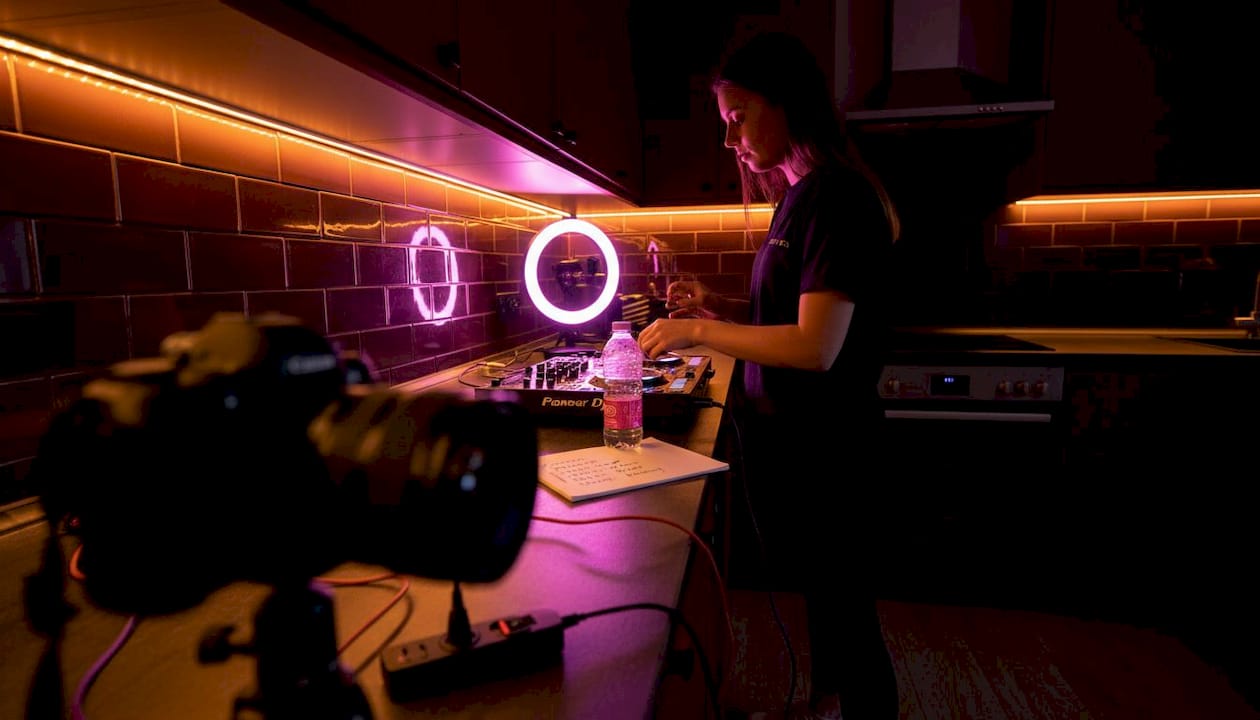
Quarterly audits are non-negotiable. Every three months, run through the video ideas checklist to see whether your content themes still align with what your audience is responding to. Trends shift quickly in electronic music and your checklist needs to evolve alongside them.
Types of DJ video content: comparison table
Having outlined a foundational checklist, compare the leading content formats DJs use so you can pick what’s right for your strategy.
Not all video formats serve the same purpose. Choosing the wrong one for your goal is one of the most common mistakes independent producers make, and it wastes months of effort. Here is a breakdown of the three most popular formats:
| Format | Best for | Main advantage | Main disadvantage |
|---|---|---|---|
| Long-form DJ mixes | Audience building and loyalty | Deep engagement and session time | Slow initial growth and harder to promote via ads |
| Short-form verticals (Reels/Shorts) | Reach and discoverability | Fast distribution across platforms | Lower conversion to dedicated fans |
| Type beats and production videos | Niche branding and search volume | High search intent and consistent traffic | Competitive and can commoditise your sound |
Long-form mixes are the backbone of a serious DJ YouTube channel. They build the kind of deep loyalty that turns casual listeners into ticket buyers and merch customers. A two-hour mix with strong retention signals tells YouTube your content is worth recommending. The downside is patience. You may wait months before the algorithm starts surfacing your mixes to new audiences.
Short-form verticals are powerful for reach but fragile for community. A Reel or Short can rack up tens of thousands of views and generate almost zero loyal subscribers. Use them as a top-of-funnel tool to introduce people to your style, then funnel that attention towards longer content.
- Pros of short-form: rapid distribution, algorithm-friendly for new accounts, easy to repurpose from existing footage
- Cons of short-form: low audience retention value, difficult to monetise directly, ephemeral engagement
Type beats occupy a fascinating middle ground. As one DJ and producer noted, organic long-form mixes on YouTube and Mixcloud build genuine audience depth, while short-form on Meta platforms drives volume but at the risk of commoditising your sound. Type beats drive search traffic but can box you into a niche that’s hard to evolve out of.
“The DJs winning on YouTube in 2026 are not just uploading content. They are engineering experiences that keep people in their world for hours, not seconds.” This distinction between depth and volume is what separates channels with 50,000 engaged fans from channels with 500,000 passive subscribers.
For help generating fresh video ideas for promotion, think about blending formats across a single campaign: a long-form mix as your hero content, a short clip as the teaser, and a type beat video as the evergreen search asset.
When and how to audit your video content
Once familiar with video types, ensure continuous improvement by routinely reviewing your performance data.
Uploading without auditing is like DJing without a monitor. You cannot hear what the crowd hears and you cannot fix what is not working. A quarterly audit is the minimum cadence for any DJ serious about growing their channel.
Here is a straightforward four-step audit process:
- Export your analytics for the past 90 days — Pull data from YouTube Studio covering impressions, CTR, average view duration, and subscriber gain per video.
- Identify your top three and bottom three performers — Look for patterns. Do your top performers share a thumbnail style, a topic, or a posting time?
- Cross-reference with your publishing frequency — Did you maintain at least one upload per week? Gaps in frequency often correlate directly with dips in channel-wide impressions.
- Set benchmarks for the next quarter — Based on what you find, update your targets. If your current retention sits at 35%, aim for 40% next quarter by improving your intros.
The YouTube channel audit benchmarks are clear: 4 to 10% CTR, 40 to 50% retention, and weekly publishing are the standards you are measuring yourself against. Every audit should answer whether you are moving towards or away from those numbers.
| Metric | Target benchmark | Action if below target |
|---|---|---|
| CTR | 4-10% | Redesign thumbnails, sharpen titles |
| Average view duration | 40-50% retention | Improve intros, cut dead air early in video |
| Publishing frequency | 1 video per week | Batch film to build a content buffer |
| Top performer | Identify the common thread | Replicate the format and topic angle |
| Worst performer | Identify what failed | Remove or unlist if it drags channel average |
Pro Tip: Do not just look at what worked. Spend equal time understanding what flopped and why. Sometimes a great idea fails because of a poor thumbnail. Sometimes the topic was brilliant but the timing was wrong. Separating the idea from its execution is the key skill in content auditing.
Keep an eye on YouTube monetisation tips as part of your quarterly review, because your content strategy and revenue potential are directly linked.
Why most DJ video checklists miss the mark
Here is the uncomfortable truth: most DJ video checklists are written as static documents. They give you a list of boxes to tick and then leave you there. But the platforms you are publishing on change every few months. What worked in 2024 on YouTube may actively hurt you in 2026. A checklist is only as useful as the thinking behind it.
The obsession with type beats is a perfect example. Many DJs and producers lean heavily into type beat content because it generates search volume and steady traffic. But as one DJ documented when explaining why YouTube long-form content was worth refocusing on, type beats commoditise your sound. You end up competing on keywords rather than artistry, and the audience you attract is looking for a generic product, not your specific vision.
Real growth comes from strategic adaptation, not checklist compliance. The DJs who are winning are the ones who understand retention at a deep level. They know that the first 30 seconds of a video either earns a viewer or loses them forever. They build intros with intention. They understand that YouTube’s role for DJs is not just as a hosting platform but as a discovery engine that rewards genuine audience connection over surface-level metrics gaming.
The checklist in this article is a foundation, not a ceiling. Treat it as your starting framework and then evolve it as your data tells you what your specific audience responds to. No two DJ channels are identical, and the producers who scale fastest are those who layer their own analytical instincts on top of established best practice.
Create your next standout DJ video with Music Video Marketplace
Taking everything from this checklist and putting it into action is the hard part, especially when you are managing gigs, music production, and social media simultaneously.
Music Video Marketplace is built specifically for independent DJs and producers who need professional video content without the production headache. The platform lets you create a long-form video in minutes, ready to upload directly to YouTube, and then launch an ad campaign around that video from the same place. No expensive video editors, no complicated workflows, no wasted weekends staring at a timeline. Whether you are testing your first YouTube mix campaign or scaling a weekly content schedule, the platform gives you the tools to execute your checklist with speed and confidence. Your next release deserves a video strategy that matches the quality of your music.
Frequently asked questions
How often should I publish new DJ video content?
Aim to release at least one video per week for steady audience growth, as weekly publishing is a key benchmark for maintaining algorithmic momentum on YouTube.
What is a good retention rate for DJ videos on YouTube?
A strong retention rate sits between 40% and 50% for DJ-focused video content, meaning nearly half your audience watches through to the end.
What types of DJ video content perform best on YouTube?
Long-form mixes build the deepest audience loyalty, while short-form and type beats deliver volume and search traffic but with less depth of connection.
How do I audit my DJ video content?
Review your content every quarter by tracking CTR, retention, publishing frequency, and identifying your best and worst-performing videos to adjust your strategy for the next cycle.
Recommended
- Master DJ video marketing to grow your fanbase in 2026 | Music Video Marketplace Blog
- Creative video content ideas for producers: boost music promotion | Music Video Marketplace Blog
- Copyright essentials for DJ videos: stay safe and grow | Music Video Marketplace Blog
- DJ YouTube monetisation: boost your income in 2026 | Music Video Marketplace Blog
- How to Master Immersive Tech Innovation 2026: 5 Surprising Secrets - Amlogy AR|VR
Read next
 Musicians: Avoid YouTube Age Restriction Policy Traps and AI ChecksHow YouTube's age restriction policy and AI age checks affect creators. Musicians: run a quick metadata check before promoting. One appeal per video.
 How YouTube algorithms boost musicians' song visibilityDiscover how YouTube's algorithm works for musicians in 2026. Learn proven strategies to boost song visibility, debunk myths, and grow your audience organically.
 YouTube Music Algorithm: Boosting Song Visibility FastYouTube music algorithm explained for musicians: types, ranking signals, session value, AI content labeling, and crucial mistakes to avoid.
 Why YouTube matters for DJs: grow your audience and careerDiscover why YouTube is essential for DJ career growth. Learn proven strategies for audience building, SEO optimisation, and overcoming copyright challenges with real success stories.
Turn the idea into a finished music video.
Drop your track into the Studio and build your visual in minutes.