
Location Release for a Music Video: A UK Guide
What a location release is, who must sign it in the UK, what it should cover, and what insurance and fees to expect before you film your music video.

Location Release for a Music Video: A UK Guide
A location release is a signed agreement in which the owner of a property lets you film there and use the footage in your finished video. In the UK, you need one before you film a music video on private property. On public land you usually need permission from the local authority instead. Get it in writing, from the person who actually has the authority to sign, before the camera comes out.
This guide covers who has to say yes, what the paperwork should contain, what insurance and fees to expect, and how to keep the release safe once your video is live.
MusicvideomarketplaceCreate a Music Video in MinutesMusicvideomarketplace helps musicians create long-form videos for YouTube and create ad campaigns for their songs.Visit MusicvideomarketplaceTL;DR
- A location release is a private contract between you and the property owner. A film permit is a separate authorisation for public land.
- Private property needs written permission from the owner or someone with authority to give it. A staff member on the day is often not enough.
- Expect to be asked for public liability insurance, commonly £5 million to £10 million, plus dates, areas, fees and rules on drones and crew.
- Filming the outside of a building from a public place does not infringe its copyright, but where you stand still matters.
- Keep every signed release with your video files so you can show it to distributors, platforms and insurers.
Table of Contents
- What a location release actually is
- Who has to give permission in the UK
- What a good location release covers
- Insurance, fees and safety
- How to get a release signed, step by step
- Storing and using the release after the shoot
- What can go wrong without one
- Perspective
- A faster route when you need a video now
- FAQ
- Sources
What a location release actually is
A location release form gives filmmakers permission from the property owner to film on a specific property, and that includes music videos. Think of it as two permissions in one. The first is physical access: you may come in, set up and shoot on certain days. The second is about the footage: the owner agrees that images of the property can appear in your finished, commercial work.
It helps to separate three things people often mix up:
- Location release (or location agreement): a private contract between the property owner and the production. UK guidance from a studio-hire company describes it as distinct from a filming licence, which is often required on public land, and from planning permission, which may matter for structural changes or extensive shoots.
- Filming permit or permission: issued by a council or other authority when you shoot on streets, in parks or on other public land.
- Property and trademark permissions: covered below, because the rules differ inside and outside a shop or restaurant.
No single statutory form exists. Anyone can draft a release, which is why the contents matter more than the template you pick.
Who has to give permission in the UK
The answer depends on who owns or controls the place you want to film.
Private property
To film somewhere private such as a home, you apply directly to the property owner. If the home is a flat or on an estate, it may be owned by a housing association or council, and you need to contact all the relevant parties. The City of London says much the same for private land: you must obtain the landlord’s consent first.
The most common mistake is taking a yes from the wrong person. Sprintlaw UK points out that a staff member on site cannot necessarily give permission for commercial filming. The owner, landlord, centre manager or head office may need to approve it. If you rent your own studio or unit, check whether your lease requires landlord consent too.
A practical rule: ask who signs the lease or owns the freehold, and put that name on the release.
Streets, parks and public land
For public land, check whether you need permission from the local authority or council. The City of London, for example, issues a Notice of No Objection for small, portable filming on its streets where no equipment or traffic control licences are needed. Parks and heritage sites may sit with bodies such as English Heritage or the National Trust, or with a private trust, so the right contact is not always the council.
Two more points from the British Film Commission:
- Under UK law, the copyright in film shot in a public place resides with the filmmaker, and you do not need to ask passers-by for permission to show their faces.
- If you plan to film on a public highway or use special effects, explosives or firearms (including replicas), you will need the full co-operation of the local police, and you should tell them in writing.
Film London adds a useful warning: however public a place seems, it is likely you need to notify or get permission from somebody.
Buildings, logos and trademarks
Section 62 of the Copyright, Designs and Patents Act 1988 means you do not need the building copyright owner’s permission to film or photograph a building. That is about copyright only. It does not give you the right to stand on someone’s land to do it. Film London makes this distinction: you may still need permission from the authority or owner depending on where you physically put your camera.

Branding follows a similar logic. Inside a store or restaurant, you need written permission to use the location and to show the chain’s name or trademark. Outside, you do not need permission to show the name, although using a location to communicate a negative message can risk legal proceedings.
Local variations
Many areas run their own codes. The Filming in England Code of Practice covers all forms of production, music videos included, shot in public places in England outside London that are likely to disrupt normal activity. Bristol’s code says no filming should take place until permissions are granted, and expects at least seven days’ notice for those affected wherever possible. In Scotland, the Screen Highland code applies to music videos in the Highland Council area and states that the Land Reform (Scotland) Act 2003 does not remove the need for a location agreement.

Before you pick a spot, search for the film office of the council area concerned. Their pages list the contact, notice period and conditions.
What a good location release covers
A release for a music video should be short enough that the owner reads it and specific enough to protect both sides. Drawing on Sprintlaw’s list of common terms and the UK guide from Soundstage Studios, build yours around these points:
| Clause | What to write down |
|---|---|
| Parties | Full names of the production (you, your label or your company) and the legal owner or authorised occupier |
| Location | Full address and the exact areas you may use, such as the rooftop but not the stairwell |
| Dates and hours | Set-up, shoot and wrap times, plus what happens if you overrun or need a second day |
| Permitted activities | Crew numbers, equipment, lighting, drones, smoke or special effects |
| Fees | The amount, who pays, overtime and any deposit |
| Insurance and liability | Public liability cover, who pays for damage, indemnity wording |
| Use of the footage | That the property can appear in the video, and whether the address or a recognisable sign may be shown |
| Restoration | Leaving the place as you found it, and what counts as acceptable alteration |
| Cancellation | What happens if weather, illness or a force majeure event stops the shoot |
| Governing law and signatures | England and Wales is typical for English locations, with both parties signing and dating |
Quarterlab’s legal guide notes that a release is especially useful where a sign or logo people would recognise is visible, and that a fee, if one applies, can be written straight into the document.
The Soundstage guide suggests a modular approach: a core agreement with parties, location, duration and indemnity, then riders for extras such as drones, historic sites or conservation areas. That keeps a simple shoot simple.
One clause deserves a second read: the grant of rights. The Argyll and Bute Council film location release form is a good example of how an authority words it. It gives the production company the copyright in all recordings made in or about the property, and it asks for proof of public liability insurance before the agreement is made. If you are the one handing out the form, make sure your wording does the same job.
Insurance, fees and safety
Owners rarely say yes without seeing insurance. Public liability cover is the usual ask, and the minimum varies by place:
- Film Lambeth requires a minimum limit of indemnity of £5,000,000, or £10,000,000 for commercial event spaces and parks, and will not process a permit without documented proof.
- The 1066 Country Film Office (Bexhill-on-Sea, Battle and Rye) asks for proof of at least £10 million.
- Kent Wildlife Trust charges £500 for a half day and £1,000 for a full day, plus VAT, for music videos on its nature reserves, requires £10 million public liability insurance, and wants applications at least two weeks ahead. Treat these as examples of the scale of fees and check the current page before you plan.
- The Filming in England code expects a copy of your public liability insurance to go to the local authority or location for all location filming. It also says risk assessments are required, and that the producer keeps a non-delegable duty to make sure the shoot is carried out safely.
In practice, ask your insurer for a short-term film or production policy certificate before you approach owners. It speeds everything up, because the certificate can be attached to the release.
How to get a release signed, step by step
- Pin down the exact location. Note the address, which rooms or areas you want and the shots you plan, so you can describe them in the release.
- Find out who owns or controls it. That might be a freeholder, landlord, housing association, council, trust or head office. Do not rely on whoever is standing there.
- Check the public-side rules. For streets, parks or council land, look at the local film office page and note notice periods, permits and police contact needs.
- Get your insurance certificate. Match the cover level to what the owner or authority asks for.
- Send a draft release. An email may be enough for a low-risk shoot, but for commercial filming with crew and equipment, or anything that could disrupt normal operations, a proper agreement is usually better.
- Agree changes in writing. If the owner wants to cut hours or ban drones, update the document rather than relying on a phone call.
- Sign and date before the shoot. Both parties sign, and each keeps a copy.
Storing and using the release after the shoot
The release is part of your video’s paperwork, so treat it that way. Soundstage Studios recommends keeping a digital archive of all location documents, with signed agreements and visual proof of permissions retained as best practice.
A simple routine works well:
- Scan the signed release, insurance certificate and any permit the same day.
- Name the files with the song title, location and shoot date.
- Store them beside the master video export, in cloud storage and on a drive.
- Share the folder with your label, manager or distributor if they ask about clearances.
If an owner or a platform queries a video later, you can answer in minutes instead of hunting through old emails.
What can go wrong without one
Permission failures tend to show up at the worst moment: after the video is edited. US-based commentary says that without a release an owner can sue for trespass, seek an injunction or demand compensation, and that a production without a signed release may struggle to distribute the footage or claim on insurance. Those sources describe US practice, so for the UK rely on the local rules above. The commercial risk is still easy to picture: a video you cannot release, or one that must be pulled after promotion has begun.
On the street, the cost can be different. Film London notes that failing to inform relevant authorities could mean police resources being deployed unnecessarily, disrupting your filming and the local community.
Perspective
We built Musicvideomarketplace around a simple observation: most of the time an independent release stalls on logistics, not on the song. Booking a location, chasing a signature, sorting insurance and agreeing a schedule can take longer than recording the track.
That is why our catalogue is made up of full-length music videos originally produced by professional filmmakers specifically for music, never created with AI or generic stock footage. You choose a video, add your audio and branding, and export it ready for YouTube, without organising a custom shoot.
If you do want to film your own footage, everything in this guide applies, and doing it properly will serve you well. If your priority is releasing quickly with a human-made video, a ready-made option puts the paperwork of a location shoot out of your day-to-day workload and lets you spend your time on the campaign.
Music
A faster route when you need a video now
A location shoot is a project in itself: scouting, owner approvals, insurance, permits and a day of filming. If you would rather release this month, our marketplace lets you browse ready-to-edit, full-length music videos, add your own audio and branding, export for YouTube and cut short clips for social media. You can also launch an ad campaign for the song.
Membership is £19.99 per month, and extra videos are £9.99 per month per video. See the membership and extra video pricing and the music video licensing page for the terms that apply to each video.

Not sure whether to film or license? Our journal piece on pre-made versus custom music videos walks through how each route fits different release plans.
FAQ
Do I need a location release to film a music video in my own home?
If you own the home, you can give yourself permission, but you should still have a release from anyone else with an interest, such as a landlord if you rent. A tenant on their own may not be enough, so check your tenancy agreement and ask in writing if in doubt.
Can I film in a public street without permission?
Not necessarily. Public land usually means checking with the local authority, and some councils issue notices or permits depending on equipment and disruption. Small, portable filming may need only a notice in some areas, such as the City of London, while larger shoots on the highway involve the police and permits.
Does a location release cover people in my video?
No. It deals with the property. In a public place you do not need to ask passers-by for permission to show their faces, but performers and anyone featured on private premises should sign their own agreements with you.
How much public liability insurance do I need?
It depends on the place. UK councils and venues commonly ask for £5 million to £10 million, and some, such as nature reserves, set £10 million. Ask the film office or owner for their minimum before you buy cover.
Can an email count as a location release?
For a low-risk shoot, written permission by email may be enough. For commercial filming with a crew and equipment, a signed agreement covering dates, areas, fees, insurance and use of the footage is the safer standard.
Sources
- Everything You Need to Know About Getting a Location Release (Peerspace)
- UK Studio Filming Laws & Location Release Guide (Soundstage Studios)
- Get Permission (Film London)
- Filming Buildings (Film London)
- Film and photography permissions (City of London)
- Regulations (British Film Commission)
- Legal Checklist for Filming in the UK (Sprintlaw UK)
- Filming in England Code of Practice
- Filming in Bristol Code of Practice
- Location Filming in the Highlands (Screen Highland)
- Film Location Release Form (Argyll and Bute Council)
- Insurance and Indemnities (Film Lambeth)
- Film Office application (1066 Country)
- Filming and photography on our nature reserves (Kent Wildlife Trust)
- Legal Guide To Shooting Videos (Quarterlab)
- What Is a Location Release and When Do You Need One? (LegalClarity)
- Location Release Form Template (NeedaCrew)
Recommended
Read next
 Lyric video cost: pricing bands and what to budgetDiscover the costs of creating a lyric video, from DIY options to bespoke productions, and find the best budget-friendly solutions.
 Lyric video creation process: your 2026 guideDiscover the lyric video creation process in 2026. Learn to sync visuals and lyrics quickly and effectively for music promotion across platforms.
 How Much Does a Music Video Cost in the UK? 2026 BudgetsWhat a music video really costs in the UK in 2026: budget tiers from £500 to £20,000+, what drives the price, hidden extras and a £19.99 a month alternative.
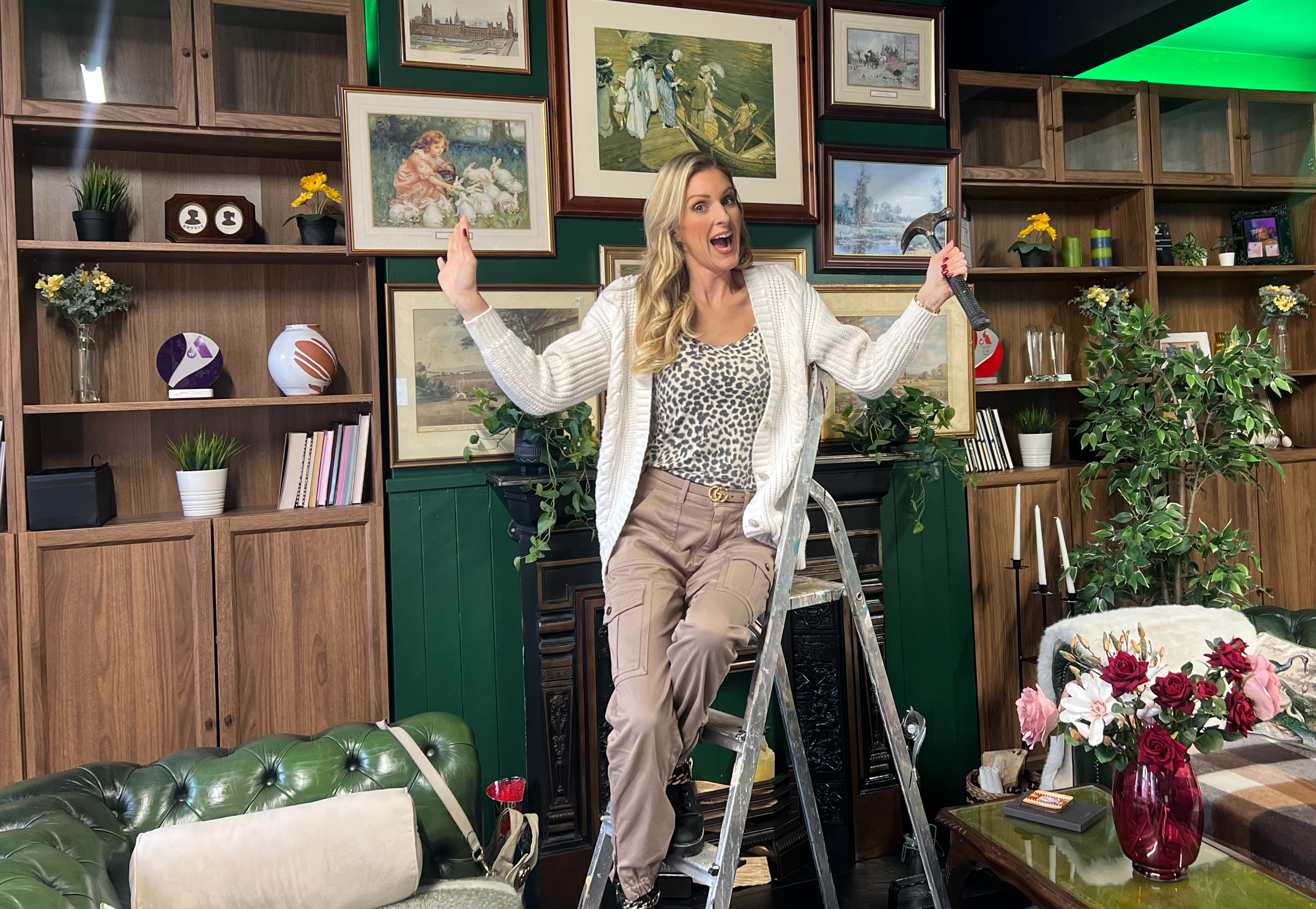 Inside Loraa White’s Vintage Country Creative OfficeLoraa White’s newly redecorated office in Dromore, Co. Down captures her love of creativity, upcycling, and countryside charm. With vintage furniture, rich colours, and DIY touches, it’s the perfect cosy space for music video shoots and content creation.
Turn the idea into a finished music video.
Drop your track into the Studio and build your visual in minutes.